
Where Are GFCI Outlets Required?
July 1, 2026
Where Are GFCI Outlets Required?
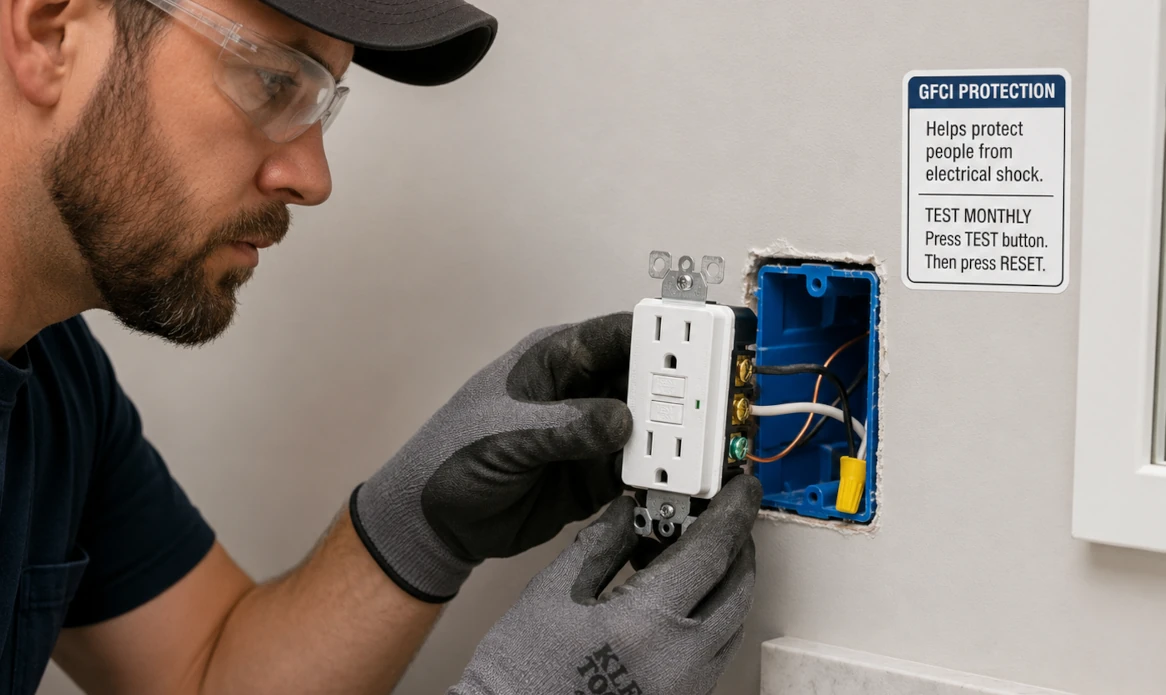
One of the most important safety features in a home’s electrical system is a Ground Fault Circuit Interrupter (GFCI) outlet. The main purpose of a GFCI is to protect people from electrical shock by shutting off power when it detects a ground fault. A ground fault occurs when electricity takes an unintended path to the ground, such as through a person, water, or another conductive material, instead of safely flowing through the electrical wiring.
If you’re remodeling your home, replacing outlets, or simply wondering whether your electrical system meets current safety standards, it’s helpful to know where a GFCI protection is typically required and where it provides the most protection.
How Does a GFCI Work?
A GFCI works by monitoring the flow of electricity between the hot and neutral wires. If a GFCI detects an issue with the power (including current flowing through a person), the outlet will quickly shut itself off as a protective measure.
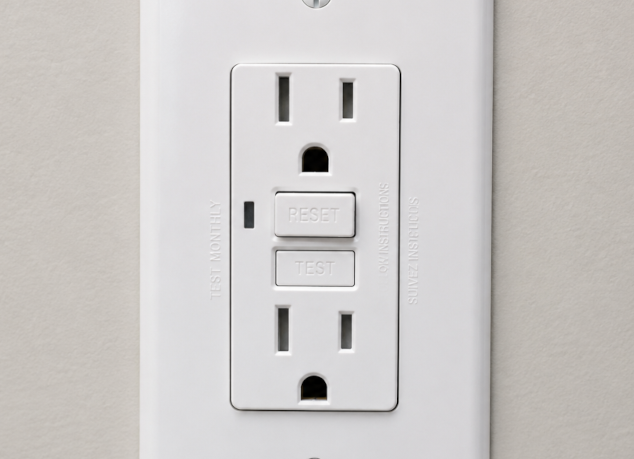
Unlike a standard outlet, a GFCI outlet has two buttons on the front: “Test” and “Reset”. The test button simulates an electrical fault to verify the shock-prevention mechanism is functioning properly. In the case that the outlet gets tripped, the reset button can be used to reset the outlet, allowing it to function normally again.

Where Are GFCI Outlets Required?
Generally, the most commonly required location for GFCI protection, under current electrical codes, is anywhere likely to come into contact with water.
Common locations include:
Bathrooms
Because of the close proximity of electricity and water, all bathroom outlets should have GFCI protection. This makes it one of the most critical places in the house to have this kind of protection.
Kitchens
Outlets on kitchen countertops require GFCI protection because of appliances being used near the sink and other water sources.
Garages
Garage outlets must be GFCI-protected due to the increased risk of moisture, concrete floors, and the use of power tools.
Laundry Rooms
Outlets in a laundry room generally require GFCI protection due to the washing machine and utility sinks creating conditions where water may come into contact with an outlet.
Crawl Spaces
Since crawlspaces tend to be damp and prone to flooding during heavy rain, it is important that any crawlspace outlet be GFCI-protected.
Outdoors
Outdoor outlets are exposed to water, such as rain, making it crucial that they be GFCI-protected.
Do Older Homes Need GFCI Protection?
Many older homes were built before updated GFCI safety codes were in effect. While those homes weren’t originally required to include GFCI, adding them is a great way to improve the safety of the home's electrical system.
How Can You Tell If an Outlet Is GFCI Protected?
The first step to identify if an outlet is GFCI-protected is locating GFCI outlets near the outlet you wish to test. Once you have located these outlets, you can press the test button to check whether the outlet you want to test is still receiving power. If the outlet being tested is still receiving power, it is likely that it's not protected. Also, make sure that after conducting this test, you hit the reset button on the GFCI outlets to restore power.
What Causes a GFCI Outlet To Trip?
A GFCI outlet may trip for several reasons, including:
- Moisture entering an outlet
- A damaged appliance
- Faulty wiring
- A worn-out GFCI outlet
- An actual ground fault
If your GFCI outlet frequently trips and will not reset, it's a good idea to have the circuit inspected by a qualified electrician.
Final Thoughts
GFCI outlets play a critical role in protecting your family from electrical shock, especially in areas where water and electricity may come into contact. If you're unsure whether your home's outlets meet current safety standards or you're planning an electrical upgrade, a licensed residential electrician can inspect your system and recommend the appropriate GFCI protection for your home.