
Electrical Warning Signs That Shouldn’t Be Ignored
Aug. 9, 2026
Electrical Warning Signs That Shouldn’t Be Ignored
Electrical problems in a home don’t always start with a major failure. In many cases, you will first see warnings that can indicate a greater issue forming in your electrical system. It could be issues such as flickering lights, warm outlets, buzzing sounds, or frequently tripping breakers.
Choosing to ignore these signs can damage your electrical system and even cause electrical fires. Knowing what to look for can help homeowners identify potential problems before they become dangerous and help determine when it's time to call an electrician.
Here are some of the most common electrical warning signs homeowners shouldn’t ignore.
1. Frequently Tripped Circuit Breakers
Circuit breakers are designed with a safety feature that shuts off power when it experiences a fault or are overloaded. If your circuit occasionally trips, that usually doesn’t point to a bigger problem, but if the breaker is repeatedly getting tripped, it might be time to investigate the issue.
Frequent breaker trips can be caused by:
- An overloaded circuit
- A short circuit
- A faulty appliance
- Damaged wiring
- An electrical panel problem
It might be easier to just reset the breaker continuously, but that doesn’t erase the underlying issue and can leave your house vulnerable to serious electrical problems.
2. Flickering or Dimming Lights
Lights that flicker, dim, or briefly lose power are often treated as annoyances, but they can also be a sign of a greater problem. They can indicate a faulty fixture, loose connection, or an overloaded circuit.
If multiple lights flicker throughout the house simultaneously, the issue may be related to your home’s electrical system rather than a single fixture.
Pay particular attention if the flickering occurs when large appliances such as air conditioners, refrigerators, or dryers turn on.
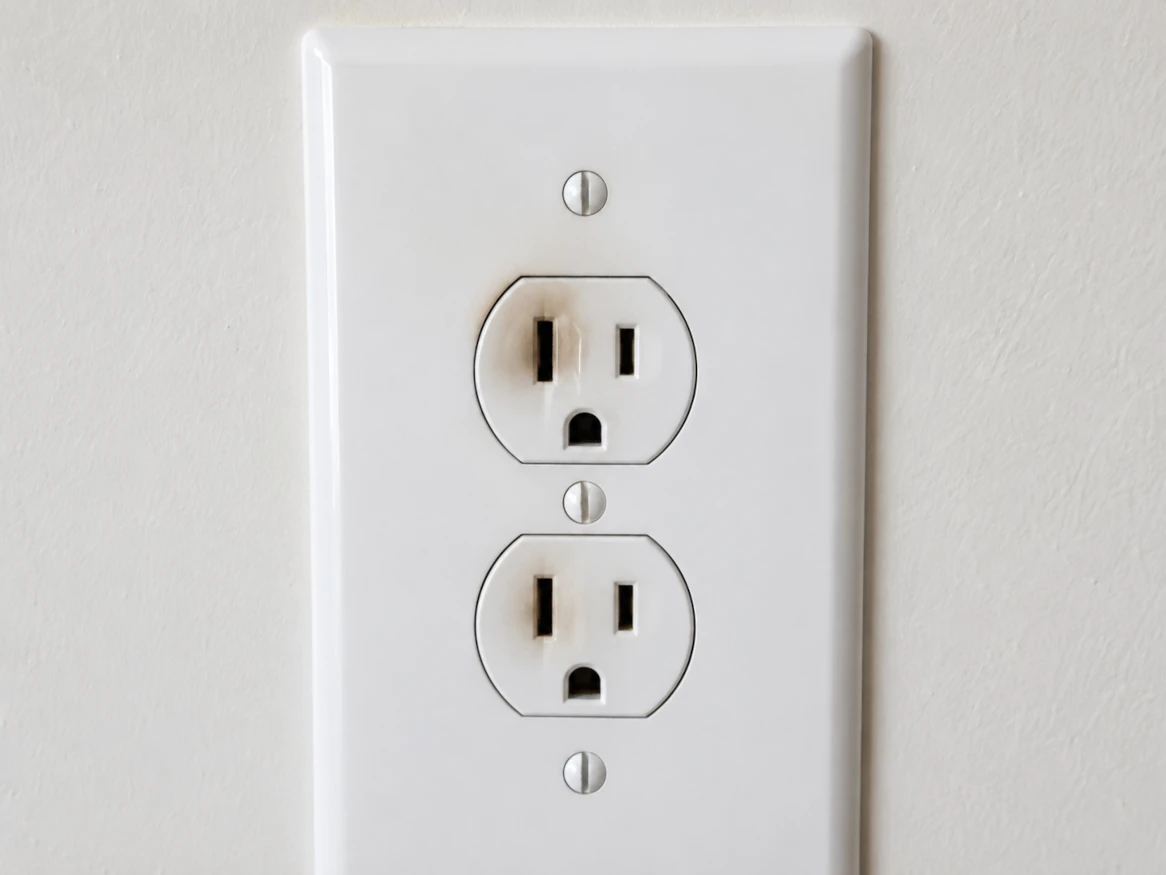
3. Warm or Discolored Outlets And Switches
Under normal use, electrical outlets and switches should generally remain cool to the touch. If an outlet or switch does feel unusually warm, it could indicate a loose connection, damaged wiring, or another electrical problem.
Brown, black, or melted-looking discoloration around an outlet or switch is an especially important warning sign.
If you notice either one of these indications, it is best to stop using it immediately and get the outlet or switch inspected by a qualified electrician.
4. Burning Smells or Smoke
A burning odor coming from an outlet, switch, electrical panel, or appliance should never be ignored.
Electrical components can overheat when wiring becomes damaged or connections become loose. Because these components are often in close proximity to insulation, the smell of the overheating insulation can be noticeable before any visible indicators.
If you start to see smoke, sparks, or an active electrical fire, leave the area and contact emergency services. Do not attempt to handle an electrical fire with water.
5. Buzzing, Humming, or Crackling Sounds
A normal electrical system should operate relatively quietly. Any buzzing, sizzling, or crackling noise coming from an outlet, switch, or electrical panel can indicate a loose wire, arcing, overloaded circuit, or failing component.
These sounds alone should not be ignored, but if accompanied by a burning smell, heat, or flickering lights, you should have the electrical component inspected by an electrician as soon as possible.
6. Outlets That Stopped Working
When one or more outlets suddenly stop working, the cause isn't always a defective outlet.
The problem could be related to:
- A tripped circuit breaker
- A tripped GFCI outlet
- A loose electrical connection
- Damaged wiring
- A failed receptacle
If resetting the appropriate breaker or GFCI doesn't restore power, the circuit should be inspected rather than repeatedly reset.
7. Repeatedly Tripping GFCI Outlets
Ground-fault circuit interrupters (GFCIs) are designed to protect people from electrical shock, particularly in areas where electricity may come into contact with water.
They’re commonly found in locations where outlets may be exposed to moisture such as kitchens, bathrooms, garages, laundry rooms, and outdoor areas.
A GFCI that trips occasionally may be responding to a legitimate ground fault. However, if the GFCI repeatedly trips, that could indicate an issue with an outlet, appliance, or the circuit itself.
8. Sparks From Outlets or Switches
A small spark can sometimes occur when plugging in or unplugging certain devices, but sparks that are large, frequent, accompanied by a burning smell, or coming from switches and outlets during normal operation deserve attention.
Sparking can be associated with damaged components, loose connections, short circuits, or electrical arcing.
Don't continue using an outlet that repeatedly sparks until the cause has been determined.
When Should You Call An Electrician?
Some electrical issues can be considered relatively simple to fix, but homeowners shouldn’t attempt to diagnose or repair these issues, as it can be potentially dangerous.
Consider contacting a licensed electrician if you notice:
- Repeatedly tripped breakers
- Burning smells
- Hot or discolored outlets
- Electrical sparks
- Buzzing or crackling
- Frequent flickering lights
- Repeated GFCI trips
- Recurring electrical problems
In the case that you do notice signs like smoke, flames, or signs of an active electrical fire, leave the home and call emergency services rather than attempting to troubleshoot the problem yourself.
Protect Your Home By Addressing Electrical Problems Early
Your home's electrical system is something you depend on every day, and many serious problems begin with small warning signs. Paying attention to unusual sounds, smells, heat, flickering, and recurring electrical failures can help you identify problems before they become more serious.
If you're experiencing electrical problems in your home, having the issue professionally diagnosed is often safer than repeatedly resetting breakers or replacing components without determining the underlying cause.
For homeowners in Loganville, Monroe, Conyers, Covington, Snellville, Grayson, and surrounding areas in Georgia, The Power Doctor provides residential electrical services to help homeowners keep their electrical systems safe and reliable.